
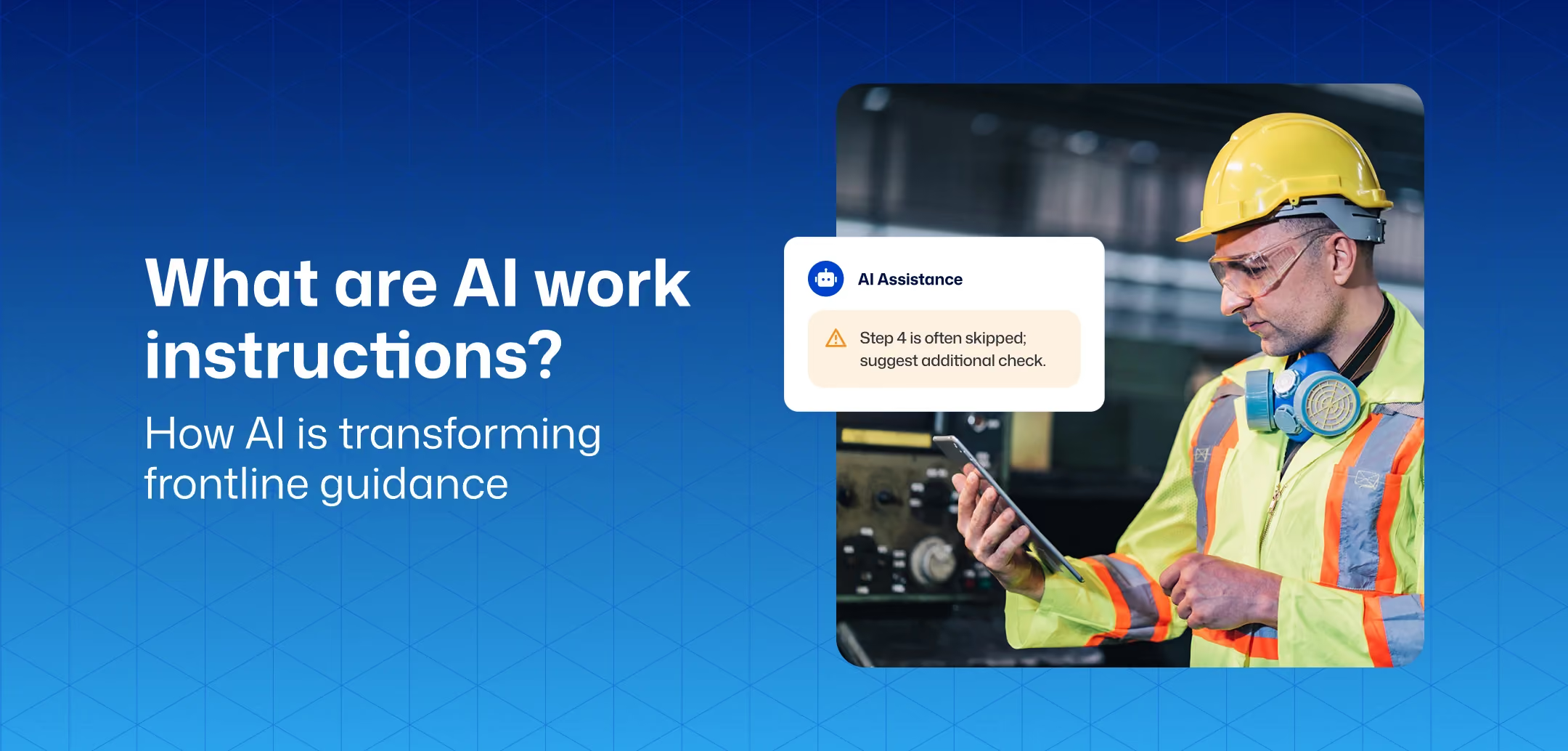

Ever walked into a factory and seen a work instruction stuck next to a machine… slightly faded, maybe outdated, maybe even ignored? Or opened a shared drive and found multiple versions of the same instruction sitting there with names like “final_v3_revised_actual_final”? Or watched a new operator pause mid-task because the only person who really knows the process is on another shift?
Come on, this is not rare. The truth is, most manufacturers already have work instructions. That is not the issue. The issue is they do not stay aligned with reality.
Processes change. Machines get updated. People find better ways of doing things. And sometimes, nobody bothers to update the document sitting in the system.
So what happens?
People stop relying on it. They ask someone nearby. They follow what they saw once during training. Or they just figure it out as they go. It works… until it does not. And that is exactly where AI work instructions start to matter.
What Are AI Work Instructions?
So what are we really talking about here?
Are they just digital SOPs with a fancy name? Not really.
AI work instructions are step-by-step guides that are created and maintained using generative AI instead of being manually written and constantly edited by engineers.
Think of it like this.
Instead of someone sitting and typing every instruction line by line, AI pulls from existing sources like SOPs, manuals, training docs, even videos of experienced operators doing the job, and turns all of that into structured, usable instructions.
Clean steps. Clear flow. Less guesswork.
And here is the important part.
They are not static. If the process changes, the instruction updates. If something is missing, it gets filled in from real operational input. If a worker needs it in another language, it can adapt instantly.
So instead of instructions being something you “go find,” they become something that stays with the work itself.
How Do AI Work Instructions Work?
Ever wondered how all of this actually comes together? Does someone manually feed everything into the system? Or does AI just magically know what to write? Neither.
It usually starts with what already exists.
Most factories already have some version of documentation. SOPs, maintenance manuals, quality sheets, maybe even old training PDFs nobody has touched in years. AI reads all of that. It pulls out structure, identifies steps, and builds a clean instruction flow from it.
But that is only half the story.
What about processes that are not documented properly? Or worse, processes where the document and reality do not match? That happens more often than people admit. In those cases, AI can build instructions from the ground up using real work.
An operator performs the task while recording it. Someone explains the steps out loud. An engineer adds context. The AI takes all of that and turns it into structured instructions. No blank page problem. No endless documentation cycles. And once the instruction is created, it does not sit in a folder somewhere. It gets pushed directly to where the work happens.
Tablet near the machine. Screen on the line. Wearable device on the operator. Right place. Right time.
And as work happens, the system can also capture proof. A photo here. A measurement there. A simple confirmation step. Nothing extra for the operator, but enough to build a real record of execution. If something is skipped, it does not get discovered later during an audit. It shows up immediately.
And when something changes?
Update once, and it reflects everywhere instantly. No printing. No version confusion. No “which one are we following today?” conversations on the floor.
AI Work Instructions vs Traditional and Digital Work Instructions
There is a big difference between them, even if they sound similar on paper.
Paper work instructions are exactly what they sound like. Someone prints them, places them near the workstation, and hopes everyone is looking at the latest version. That works...until a process changes. Then someone has to update the document, print new copies, collect the old ones, and somehow make sure nobody is still following last month's instructions.
Digital work instructions solve some of those problems, but not all of them.
Instead of sitting in a binder, they live in a document management system or a shared drive. They are easier to distribute and update, but someone still has to rewrite them, upload the new version, and make sure everyone knows the change happened. In many factories, those "digital" instructions are really just PDFs replacing paper.
Paper tells people what the process was. Digital tells people what someone last documented. AI has the potential to reflect what the process looks like today.
What Are the Benefits of AI Work Instructions?
The biggest change is not speed. It is consistency. Everyone sees the same instruction, no matter the shift or location.
Training also becomes easier. New operators are not relying only on verbal guidance or shadowing someone for weeks. They have structured instructions they can actually follow. Then there is knowledge retention.
When experienced workers leave, their knowledge does not leave with them. It stays captured in the system. And finally, updates stop being a bottleneck. Changes do not require rewriting entire documents. They flow through the system automatically.
Use Cases
AI work instructions show up differently depending on the function.
In assembly, they guide step-by-step product building without variation between shifts. It basically means you don't have to worry about the night crew doing things their own way, everyone follows the same digital roadmap, so the final product is identical every time.
In maintenance, they help technicians follow exact troubleshooting steps instead of relying on memory. When a machine goes down, you don't want someone guessing or trying to remember a fix from six months ago; you want them following a proven path that gets the line moving again without the trial and error.
In inspections, they standardize how checks are done so quality is consistent. It takes the "gut feeling" out of the process by giving inspectors clear, visual benchmarks for what passes and what doesn't, making sure a "good" part is actually good, regardless of who's looking at it.
In onboarding, they reduce dependency on shadow training and help new hires become productive faster. Instead of having a senior tech tied up for weeks explaining the basics, the new hire can follow the instructions and start contributing on day one, which takes a massive load off your experienced team.
How AI Work Instructions Capture Tribal Knowledge
Most factories do not struggle with lack of knowledge. They struggle with knowledge that is not written anywhere.
It lives in people’s heads. Senior operators. Maintenance leads. Shift supervisors who have been doing things a certain way for years. AI helps capture that. Not by replacing people, but by recording how they actually work.
A video becomes a procedure. A walkthrough becomes documentation. A conversation becomes structured guidance. Slowly, that “unwritten knowledge” stops being invisible.
What to Look for in an AI Work Instruction Platform
Not all systems solve the same problem. Some things actually matter.
- Can it pull from existing documentation easily?
- Can it be updated without rebuilding everything?
- Does it work on the floor, not just on a desktop?
- Can it capture real execution data, not just instructions?
And most importantly, does it actually reduce confusion, or just create another layer of software?
Because tools are not the goal. Better execution is.
How Atheer Can Help
Most manufacturing problems do not come from lack of instructions.
They come from instructions not reaching the floor at the right time, or not reflecting what is actually happening in real conditions. Atheer helps close that gap.
It brings work instructions directly to the point of work, instead of keeping them locked in systems people rarely open during operations. With Atheer, teams can:
- deliver step-by-step digital instructions on devices used on the shop floor
- capture real-time proof of execution during critical steps
- identify missed or skipped actions before they become quality issues
- keep instructions updated across systems instantly
- connect workflows with existing enterprise systems like ERP and MES
So instructions stop being something you refer to occasionally.They become something that actually guides work as it happens.
Conclusion
Work instructions are not new. But the way they are created, maintained, and used is changing.
Static documents are slowly becoming too slow for how fast manufacturing environments actually move. AI work instructions shift that balance.
They keep knowledge current, reduce dependency on memory, and make sure execution matches documentation. And in manufacturing, that alignment is usually where everything either works… or breaks.
Want to create work instructions in minutes, not weeks? Explore Atheer Now!



.webp)

.webp)